Marketing Funnel Explained :The Coffee Subscription That Stalked Me (A Love Story)
Before I start explaining the marketing funnel in technical terms, let me tell you a story that happened to me.
So like, last Tuesday I’m doom-scrolling Instagram at 2 AM because apparently I hate sleep, and boom—there’s this ad for some fancy coffee subscription service. “Ethically sourced beans delivered to your door” or whatever. I was like ‘oh okay’ and scrolled past it. Didn’t think much of it at that time.
Then fast forward to Thursday. So there I was, watching YouTube videos about cats being scared of cucumbers for some reason (don’t ask why?), and guess who appeared on my screen again? My coffee friends. But this time they’re not just like “hey we exist.” Now they’re hitting me with “Tired of your boring morning routine? Our single-origin Colombian blend will change your LIFE.”
I’m still not buying. I literally have a coffee maker that works fine, thanks.
Here’s where it got wild. It was Friday morning, I’m checking my email, and there’s a newsletter I don’t remember signing up for. Oh look, it’s the coffee people again. Now they’re showing me customer reviews, talking about how their coffee is cheaper than my daily Starbucks run (rude but fair), and throwing in a 20% discount code.
At this point I’m like… okay maybe I DO need fancy coffee delivered to my house?
That weekend, I see them AGAIN on Facebook. This time it’s a limited-time offer, free shipping, and “only 3 hours left” (which is definitely not true but whatever).
And yeah… I bought it.
That whole journey? That’s what marketers call the customer journey funnel. They got me from “who are you?” to “take my money” without me even realizing I was being gently herded like a very caffeinated sheep.
First they made me aware they exist. Then they made me consider why I might need them. Then they convinced me to actually buy.
Sneaky, but honestly? Respect
What is Marketing Funnel
Now lets move forward and understand what a marketing funnel is.
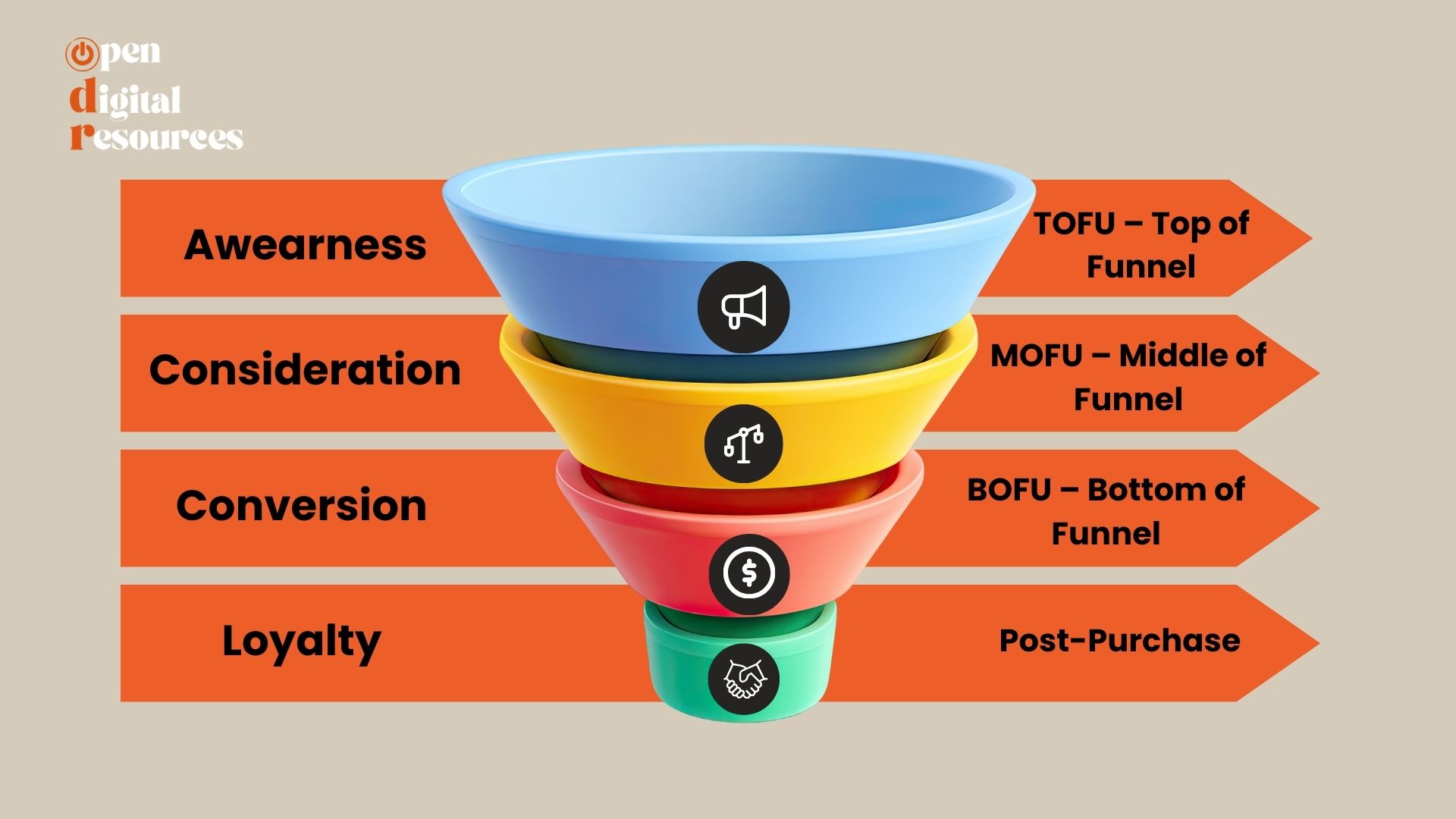
Remember how I went from “random person scrolling Instagram” to “proud owner of overpriced coffee beans”? That whole weird journey has a name—it’s called a marketing funnel. It is a model that visualizes the customer journey, from the point they hear about you to the point they buy and continue to return. It represents the journey of prospects through stages of awareness, consideration, and conversion, from a broad audience to a smaller audience of converted customers.
Visualize an actual funnel, like the one you use to pour stuff into a bottle, which is wider at the top and narrow at the bottom. That’s exactly what happens with a customers goes through different stages in a conversion funnel.
At the top? TONS of people see that first Instagram ad. Maybe around 10,000 people scroll past it. Most of them are like “meh” and keep moving. That’s normal. They drop out.
Then maybe 2,000 people actually stop and look at the second ad about “transforming your morning routine.” Cool, we’re getting somewhere. But still, most people bounce. More drop out.
By the time we get to that Friday email with the discount code? Maybe only 500 people are still paying attention. And when that “limited time offer” hits on the weekend? Maybe 50 people actually buy.
What are the stages in a marketing funnel?
Most marketing funnel stages follow a pretty standard pattern, though some companies get super detailed and add more. Here’s the breakdown:
1. Awareness Stage (TOFU – Top of Funnel)
What it is: “Oh hey, this exists.”
At the top of the funnel when I first saw that Instagram ad? I didn’t even know this company existed. So they kept it simple: “Hey, we’re a coffee subscription service.” Just awareness consideration conversion starts here—pure awareness stuff. No pressure.
This is where the digital marketing funnel really kicks in. The company is casting the widest net possible, trying to get in front of as many eyeballs as they can.
What companies do here:
- Social media ads (Instagram, Facebook, TikTok)
- Blog posts and SEO content
- YouTube videos
- Podcast sponsorships
- Display ads
- Influencer partnerships
The goal: Just get people to know you exist. That’s it. Don’t be pushy, don’t ask for the sale. Just introduce yourself.
2. Consideration Stage (MOFU – Middle of Funnel)
What it is: “Hmm, should I actually get this?”
Middle of the funnel with those YouTube and email ads? Now I knew they existed, so they switched gears. They started selling me on WHY I should care: “Save money! Better quality! Convenience!” They were trying to get me from “I know about you” to “I’m actually considering this.”
This is the consideration stage of the marketing funnel where things get interesting. The company knows I’m interested, so now they’re competing with other coffee subscriptions for my attention.
What companies do here:
- Email nurture campaigns
- Comparison guides
- Customer testimonials and reviews
- Case studies
- Product demos
- Retargeting ads with more detail
- Webinars or educational content
The goal: Convince people that YOUR solution is the best one for their problem. This is where you differentiate yourself from competitors.
3. Conversion Stage (BOFU – Bottom of Funnel)
What it is: “Okay fine, take my money.”
Bottom of the funnel with that weekend discount? I was already interested, I just needed that final push. So they hit me with urgency (“limited time!”) and removed barriers (“free shipping! 20% off!”).
This conversion funnel stage is where the magic happens. All that work from the previous stages pays off.
What companies do here:
- Limited-time discounts
- Free shipping offers
- Money-back guarantees
- Easy checkout process
- Live chat support
- Payment plans
- Abandoned cart emails
The goal: Remove every possible objection and make it as easy as possible to say yes.
4. Loyalty Stage (Post-Purchase)
What it is: “I love this, I’m buying again and telling everyone.”
Here’s the thing—the funnel doesn’t end when I buy the coffee. There’s actually another stage after that: loyalty.
After I made my purchase, the company didn’t just ghost me. They sent a thank-you email, asked for a review, told me about their referral program, kept sending me content about different coffee brewing methods. They’re trying to turn me from a one-time buyer into a repeat customer and eventually someone who tells all my friends about them.
What companies do here:
- Thank you emails
- Customer satisfaction surveys
- Loyalty programs and rewards
- Exclusive content for customers
- Referral incentives
- Re-order reminders
- Community building (Facebook groups, etc.)
The goal: Turn one-time buyers into repeat customers and brand advocates. Fun fact: it costs 5 times more to get a new customer than to keep an existing one.
How Marketing Funnels Actually Work?
Let me break down the funnel strategy with some actual numbers so you can see how this plays out.
Real Talk Example
Let’s say the coffee company puts their first Instagram ad in front of 50,000 people (top of funnel—super wide).
Maybe 5,000 of those people actually click on it because they like coffee. Everyone else? Dropped out. Not interested. That’s fine.
Of those 5,000, maybe 1,000 people engage with the follow-up ads, sign up for emails, check out the website. The rest? Lost interest. Also fine.
Of those 1,000, maybe 100 people make it to the checkout page when that discount offer hits.
And finally, maybe 30 people actually complete the purchase (bottom of funnel—super narrow).
That’s the funnel in action. 50,000 → 30.
Sounds rough, but here’s the thing: those 30 people are QUALITY customers. They’re the ones who actually wanted the product, could afford it, and were ready to commit. The funnel helped the company filter through everyone else to find them.
Why Businesses Love This
The funnel gives companies a crystal-clear view of their entire customer journey funnel so they can:
- Stop wasting money advertising to people who’ll never buy
- Create different messages for different stages (no more one-size-fits-all)
- Spot problems (like “why is everyone dropping out after the email stage?”)
- Make smarter decisions about where to invest their marketing budget
The Real Power: Knowing When People Bail
This is probably the most valuable thing about funnels—they show you where you’re losing people.
Say most people drop off after the consideration stage (like, they’re interested but they’re not buying). That tells the company their messaging in the middle of the funnel probably needs work. Maybe they’re not explaining the benefits clearly enough, or maybe competitors are offering better deals.
Or if tons of people are making it to checkout but not completing the purchase? That’s a conversion problem. Maybe the checkout process is too complicated, or there are surprise shipping fees, or the site looks sketchy.
The funnel is basically a diagnostic tool. It tells companies what’s broken so they can fix it.
Digital Marketing Funnel Strategy
The whole buying process is really messy these days. People don’t see one advertisement. Then buy something right away. The buying process is messy because people think about it a lot before they actually buy something. They look at things before they make a decision to buy. The buying process is just not simple anymore.
I will probably click on their Instagram ad. Then I will Google the company to find out more about them. This is because I want to know what other people think about the company. So I will read some reviews on Reddit. After that I will check out the company website on my laptop. Sometimes I see another ad on YouTube. It reminds me about the company. I might ask my friend if she has heard of the company. I will go back to the company website on my phone and look at it again. Then finally I will buy something from the company.
That is not a line, it is all, over the place. The line isn’t straight all the line is very crooked.
But the digital marketing funnel helps companies think about ALL those touchpoints. They’re not just focused on that final sale. They’re thinking about every single way I might interact with them along the way.
Why Digital Changes Everything
Like, 84% of people start their product searches on platforms that AREN’T the company’s website. So if the coffee company was only advertising on their own site, they’d miss basically everyone. The funnel reminds them to be everywhere their customers are.
Content Marketing Funnel
Here’s how a smart content marketing funnel works across different channels:
Awareness (TOFU):
- Blog posts answering common questions
- Social media content
- Infographics
- Educational videos
- Podcast appearances
Consideration (MOFU):
- Comparison guides
- How-to tutorials
- Email sequences
- Webinars
- Case studies
Conversion (BOFU):
- Product demos
- Free trials
- Customer testimonials
- FAQ pages
- Special offers
Loyalty:
- Exclusive content
- Community forums
- Advanced tutorials
- Loyalty rewards
- Referral programs
How to Build Your Own Marketing Funnel
If you’re wondering how a company actually creates a funnel, here’s the breakdown:
Step 1: Figure Out Who Your Audience Is
Like, really dig into who’s most likely to buy. Don’t just say “everyone who likes coffee.” Get specific:
- Age range
- Income level
- Pain points
- Where they hang out online
- What motivates them
Step 2: Create Different Content for Each Stage
Blog posts for awareness, comparison guides for consideration, special offers for conversion, thank-you emails and loyalty programs for post-purchase.
For example, if I’m the coffee company selling customized phone chargers for Father’s Day (random pivot but okay):
- Awareness: Blog post with “10 Great Father’s Day Gift Ideas”
- Consideration: Social media posts about why personalized gifts are more meaningful
- Conversion: Landing page explaining the customization process with customer reviews
- Loyalty: Thank-you email with a discount for next time, plus asking for a testimonial
See how each piece of content matches the stage? That’s intentional.
Step 3: Generate Leads
Get people to sign up for emails, download free guides, enter contests—anything that gets them into the funnel.
Step 4: Nurture Those Leads
Send targeted emails, show relevant ads, provide helpful content. Basically guide them through the journey using your funnel marketing strategy.
Step 5: Analyze Everything
Track what’s working, what’s not, and adjust constantly. This is where the marketing funnel analytics come in:
- Click-through rates
- Conversion rates at each stage
- Drop-off points
- Cost per acquisition
- Customer lifetime value
Conclusion: Why the Marketing Funnel Actually Matters
The marketing funnel isn’t just some business buzzword. It’s actually a super practical tool that helps companies:
Stop burning money on terrible ads
Say the right thing at the right time
See exactly where they’re losing customers
Build relationships instead of just chasing sales
Turn one-time buyers into lifelong fans
And for us as customers? Honestly, it means we get less annoying, more relevant marketing. Which… I guess I appreciate? Even if they did successfully convince me to spend $45 a month on coffee I don’t technically need.
Knowing how marketing funnels work is just plain smart. You’ll start noticing these tactics everywhere—from the ads in your feed to the emails in your inbox to the limited-time offers that seem to magically appear right when you’re about to buy something.
Whether you’re trying to develop your own funnel strategy for digital marketing or just trying to understand why you keep buying stuff that you don’t need – the funnel explains it all. It’s the roadmap from stranger to customer to superfan.
So next time you see an ad at 2 AM and think, “Oh cool,” remember: you’ve just entered the top of someone’s funnel. And if they’re good at what they do? You might just end up with a coffee subscription you never knew you needed.
Manipulative, but effective. That’s the story of modern marketing, really.
Explore More resoures. Check out my Linkedin profile.